


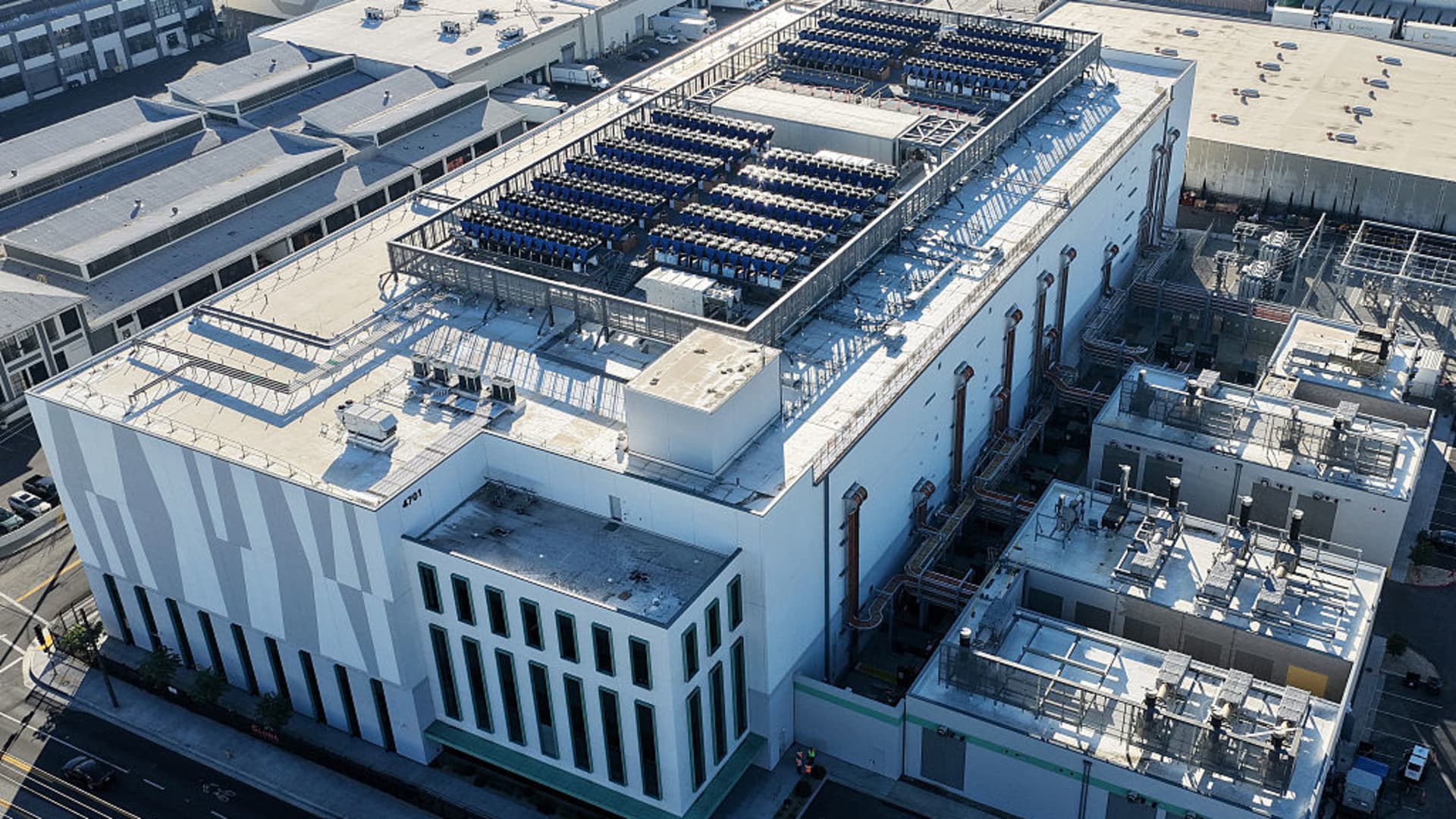

Artificial intelligence is no longer a restricted technological profession. It is reshaping energy markets, infrastructure spending and portfolio construction. Investors who focus solely on chips and software may be confused about where the next phase of value will play out, according to investment experts on this week’s episode of CNBC’s “ETF Edge.”
Some of the trends and innovations driving the market, as well as rapid business growth, are linked to the physical demands of AI. Power supply, cooling, network stability and data center efficiency have become binding constraints. Just look at the stock price of Flowering Energywhich, for years after its 2018 IPO, struggled to earn a return above its IPO price. Since last year, when its on-premises fuel cells began being ordered furiously for data centers, Bloom has seen its shares soar more than 500% and the company reach a market capitalization of more than $30 billion.
There are many opportunities emerging in small and mid-cap companies for investors. Companies that were once outside the market’s attention are “moving up the cap table very quickly,” Jennifer Grancio, global head of distribution for TCW Group, said Monday on “ETF Edge.” In many cases, these companies operate in small segments with limited competition, allowing fundamentals to improve faster than investor awareness.
Energy reliability is the central issue. In recent years, as the cost of renewable energy sources fell and became competitive with fossil fuel sources, the market debated the question: “How much consistency could we get without wind power, or could we get away with solar power?” Grancio said. But AI has been a game-changer since data centers cannot tolerate intermittency, requiring a constant supply of energy to avoid unintentional downtime.
This reality has led to “a huge shift toward nuclear,” according to Grancio, including renewed investments in the maintenance of existing plants and the development of small modular reactors. These projects create new suppliers and accelerate the growth of specialized players located upstream of public services and hyperscalers.
Nuclear Energy ETF
- First Trust Bloomberg Nuclear Power ETF (RCTR)
- VanEck Uranium and Nuclear ETF (NLR)
- Themes ETF Uranium & Nuclear (URAN)
- ETF Range Nuclear Renaissance (NUKZ)
- Global X Uranium ETF (URA)
Efficiency within the data center is equally essential. As AI workloads increase, cooling and power management have become choke points. Investors are increasingly attracted to companies that are “one or two in their field” and “the best in a certain technology,” especially where alternatives are limited, Grancio said.
The structure of these markets is important. In some cases, there are “only a few providers” close to oligopolies, explained Mr. Grancio. This focus creates operational leverage, but it also means that missteps can be costly.
As a result, actively managed ETFs are gaining ground. While passive indices can capture general market returns and indices add new companies as constituents as they evolve, active strategies aim to identify them earlier and maintain them through multiple growth phases.
But the risks can be significant. Parts of AI-powered ecosystems include “financially weak small businesses” that rely on electricity demand, said Jan van Eck, CEO of VanEck. “It also means you get a lot of volatility along the way,” he said on “ETF Edge.”
As a result, he said no single AI theme should dominate an investor’s asset allocation. “You don’t want to overweight them in your portfolio,” Van Eck said.
He described Van Eck’s nuclear ETF as trading at “eye-popping levels” last year before becoming a more reasonable entry point for new investors.
ETF experts said that as investors integrate the AI theme into their portfolio construction in a more targeted manner in 2026, active rebalancing and clear risk expectations will allow investors to stay invested without chasing the highs or panicking on the dips.
Source | domain www.cnbc.com