

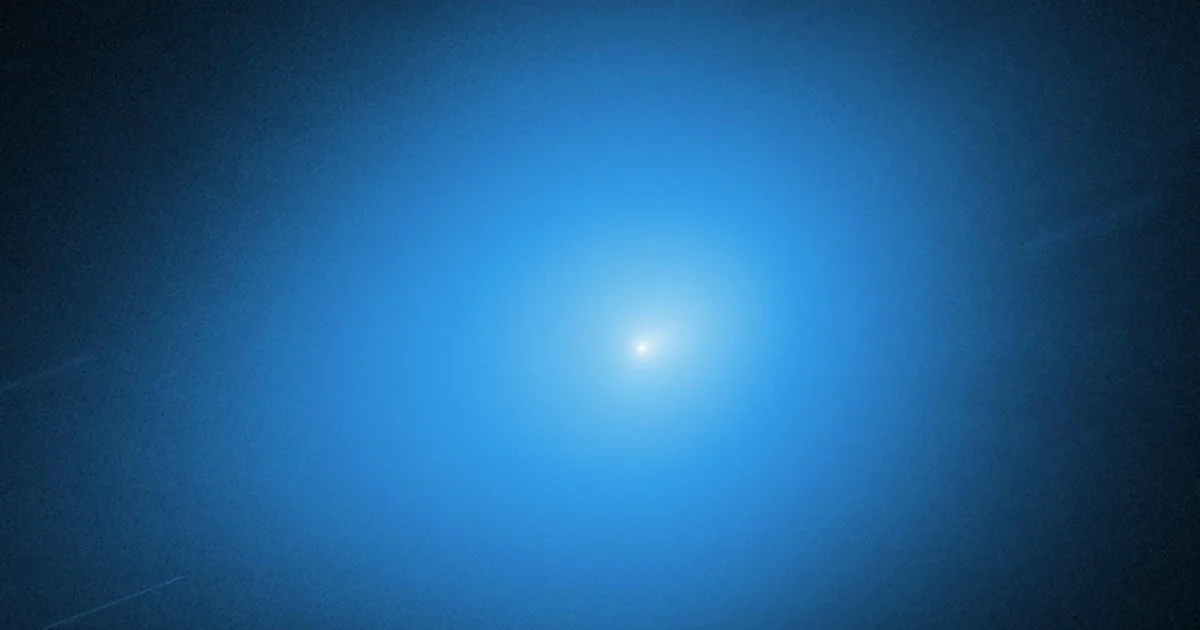
A wandering comet of another star passes Earth this week in one last hurray before heading back toward interstellar space.
Discovered over the summer, the comet known as 3I/Atlas will pass Friday less than 269 million kilometers from our planet, as close as possible during its grand tour of the solar system.
NASA continues to point its space telescopes toward the visiting ice ball, which is estimated to be between 1,444 feet and 3.5 miles in size. But it fades as it disappears, so it’s time for astronomers to observe it in the night sky with their telescopes.
The comet will come much closer to Jupiter in March, traveling less than 33 million kilometers. It will be until the mid-2030s before it reaches interstellar space, never to return, said Paul Chodas, director of NASA’s Center for Near Earth Object Studies.
It is the third known interstellar object to pass through our solar system. Interstellar comets like 3I/Atlas come from star systems elsewhere in the Milky Way, while local comets like Halley come from the icy fringes of our solar system.
A telescope in Hawaii has discovered the first confirmed interstellar visitor in 2017. Two years later, an interstellar comet was spotted by an amateur astronomer from Crimea. NASA’s Atlas Telescope in Chile spotted Comet 3I/Atlas in July while searching for potentially hazardous asteroids.
Scientists believe that the latest rogue comet, also harmless, could come from a star system much older than ours, which would make it a tempting target.
NASA has released several images of 3I/Atlas, including one last month showing it moving through space approximately 180 million kilometers from Earth.
NASA, ESA, STScI, D. Jewitt (UCLA), M.-T. Hui (Shanghai Astronomical Observatory), J. DePasquale (STScI) via AP 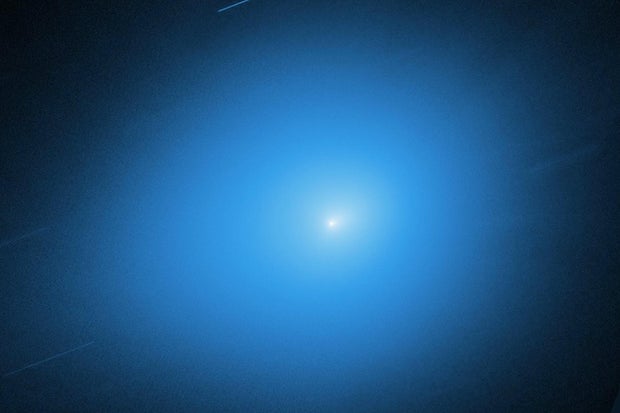
In October, images taken by two Martian orbiters showed a bright, fuzzy white dot of the comet, appearing to move against a backdrop of distant stars while it was about 18,641,135 miles from Mars.
In September, a the image showed the tail growing of 3I/ATLAS crossing our solar system.
Ari Loeb, Harvard scientist, who believes he saw proof of extraterrestrial life previously said he suspected the object might instead have extraterrestrial origins.
“We should put on the table all the possibilities that it’s a rock or a comet or something else until we get the evidence, the data that will tell us what it is,” Loeb said in an interview with CBS Boston.
Source | domain www.cbsnews.com