


Thirty million. That’s a big number. Perhaps not in the context of economic news, where we generally talk about company valuations running into the billions, or even trillions. But when we talk about people, 30 million is a very important number.
Thirty million people are living with a rare disease in the United States, according to the National Organization for Rare Disorders.
Defining a rare disease can be tricky. In the United States, a disease is considered rare if fewer than 200,000 Americans have it. The Centers for Disease Control and Prevention says that equates to fewer than 7 in 10,000 people. In the European Union, a disease is considered rare if it affects no more than 5 in 10,000 people. which the Alzheimer’s Association estimates at more than 7 million in the United States last year. But when we consider that there are more than 10,000 rare diseases and that up to 400 million people suffer from them worldwide, we begin to realize this.
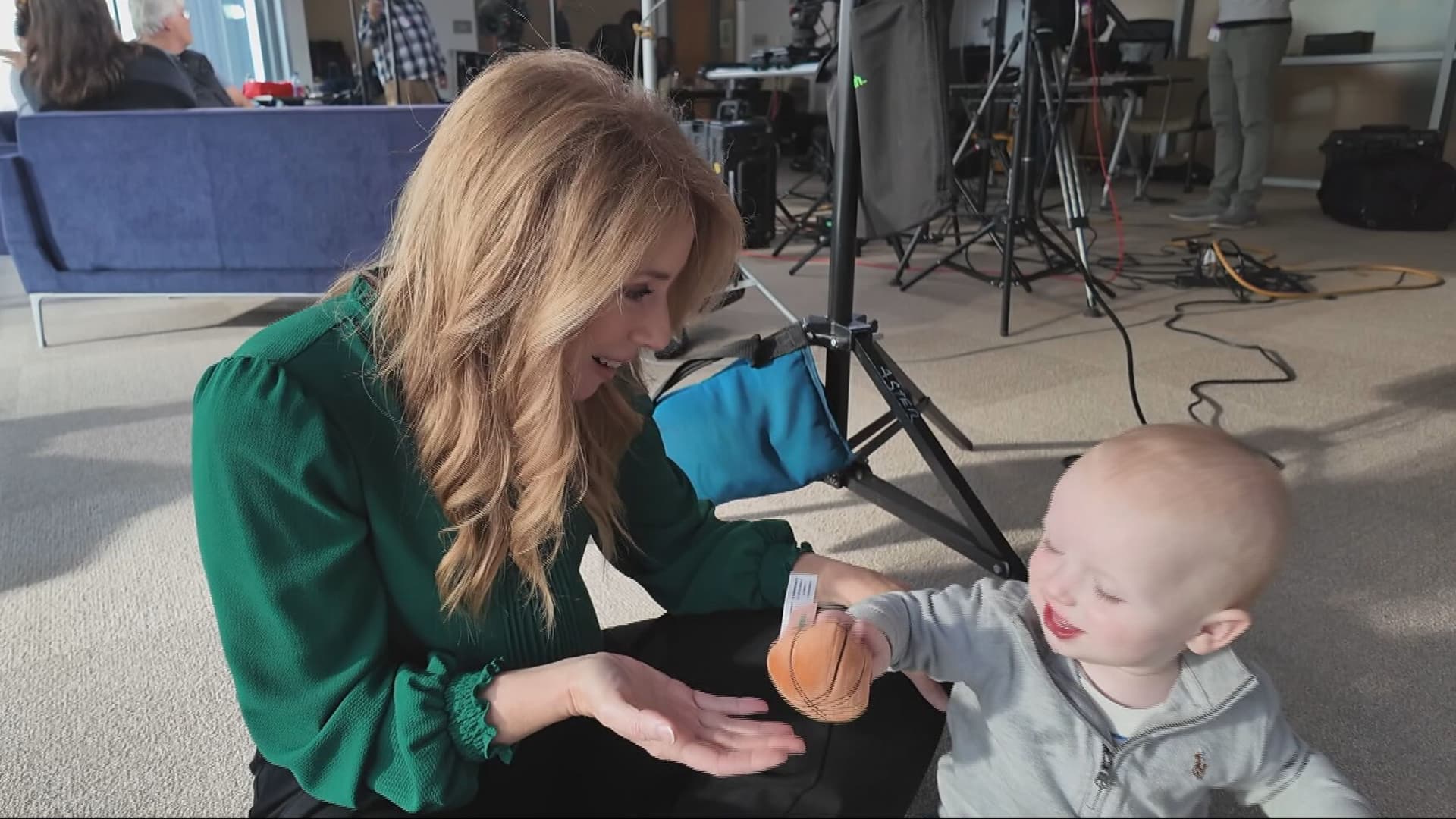
That’s why we’re launching CNBC Cures, a new initiative to raise awareness of rare diseases and improve outcomes for people living with them. Led by ‘Squawk Box’ presenter Becky Quick, the initiative was inspired by her family’s rare disease journey.
Kaylie’s diagnostic odyssey
Quick’s youngest daughter, Kaylie, was just 7 months old when Becky first suspected something was wrong.
“She wasn’t hitting certain developmental milestones and that worried me,” Quick said.
Becky and Kaylie on a merry-go-round.
Becky Quick
Kaylie visited several doctors and, at first, none of them seemed concerned. But after several months, a developmental-behavioral pediatrician diagnosed Kaylie with global developmental delay, a broad term given to a child who is significantly delayed in reaching developmental milestones, like walking and talking. But the diagnosis did not reveal a cause.
Her family was left searching for answers until, just before Kaylie’s third birthday, a genetic test revealed the root cause of Kaylie’s difficulties. She had SYNGAP1, a rare genetic disorder that has only been diagnosed in about 1,700 people worldwide.
“Our neurologist didn’t know what it was,” Quick said. “She told us, ‘You’ll probably know more than me by the end of the weekend.’ And we did it.”
“We ran to Google and started Googling things,” Quick said. “There were researchers already working, and thank God they had. That’s why we knew so much about SYNGAP1.”
SynGAP is a protein essential for brain development. This helps with learning and memory, but also regulates communication in the synapses of the brain. Kaylie has a genetic mutation in her SYNGAP1 gene that causes her brain to only get about half the SynGAP protein it should get. This makes it difficult for neurons in his brain to communicate effectively.
Despite the small population of patients with SYNGAP1, it is believed to be much more prevalent than it once was. Mutations in the SYNGAP1 gene are surprisingly common and are estimated to account for between 1 and 2% of all intellectual disabilities. An article published by CURE SYNGAP1 states that this figure could be as high as 76,000 in the United States alone. But because most doctors are unaware of the symptoms of SYNGAP1 and the vast majority of newborns are not screened for genetic diseases at birth, it is believed that most cases of SYNGAP1, like many rare diseases, go undiagnosed.
SYNGAP1 is a spectrum disorder, meaning not all patients are affected in the same way or with the same severity. It is common for SYNGAP1 patients to suffer from seizure disorders, intellectual disabilities, autism, motor delays, speech difficulties, balance and coordination problems, and elevated pain thresholds. Kaylie has all of these symptoms.
Kaylie smiling when she was younger.
Becky Quick
As Kaylie grew older and became more mobile, it became more difficult to manage her symptoms.
“We have all the doors locked all the time so she doesn’t get out. She doesn’t know to call if she needs help,” Quick said. “She was falling and hurting herself without even realizing it or saying anything. You saw the blood, or you saw the bruise,” Quick added.
Despite her physical challenges, Quick says Kaylie is still a happy and active child. “She can do all these things that maybe people thought she couldn’t. She doesn’t just walk. She runs. She runs everywhere, in the house, outside. She jumps. She’s a daredevil. She loves roller coasters…she loves movement,” Quick added.
Kaylie on a stroll at Sesame Place.
Becky Quick
There is no cure for SYNGAP1. Several treatments are in development, but none have yet progressed beyond clinical trials.
Progress has been made in identifying more individuals with SYNGAP1. A 2019 census recorded only 484 patients worldwide. Shortly after Kaylie’s diagnosis, that number rose to 1,000. There are now more than 1,700 worldwide.
Expanded access to genetic testing for newborns, a cause that nearly everyone in the rare disease community is rallying behind, could help identify more SYNGAP1 patients. This is essential when dealing with rare diseases, because a larger patient pool can attract more research and funding for treatments. It also helps regulators better understand the magnitude of a disease, which can ultimately help bring these treatments to market more quickly.
Although there is no treatment Kaylie can follow to remedy her disorder, her parents have established a routine anchored by her therapists, family, and a strong support system to help her overcome the many challenges she faces.
“She works really hard every day. Every day, Kaylie works harder than any of us, and that’s just who she is,” Quick said.
“She loves her sisters and her brother. She loves her cousins and she loves her family. She has friends at school…she’s just happy every day, and I’m grateful for that.”
Why CNBC?
“I was amazed at how many people are experiencing something similar,” Quick said. “The idea that this is a universal struggle that so many people are going through…it kind of kept the wheels turning for us.”
“We’re the lucky ones. We have resources,” Quick said. She and her family began thinking about how they could make a difference for others facing a rare disease diagnosis.
Rare diseases are often overlooked by investors and pharmaceutical companies. As a result, patients diagnosed with a rare disease are generally poorly cared for by the medical community. Declining populations of diagnosed patients make it difficult to obtain funding for research into treatments for rare diseases. And where promising research exists, these smaller patient populations make it harder for potentially life-saving treatments to overcome regulatory hurdles and reach patients who need them.
This is where Quick saw an opportunity to make a difference.
“We thought, you know, CNBC has a pretty unique audience. It’s an influential audience. It’s an audience of people who know how to get things done. Why not leverage what they can bring to the table as well?” she said.
CNBC Cures partners with some of the nation’s top researchers, doctors, regulators and patient advocacy groups.
The goal of the initiative is to help build a community capable of removing barriers that can limit treatment options and isolate people living with a rare disease. Through our stories and live events, we will work to identify the most innovative scientific developments in rare diseases and shine a light on the bottlenecks that prevent them from reaching patients who need them.
Becky Quick with KJ Muldoon. KJ, born with the rare disease CPS1, was the first known person to receive personalized CRISPR-based genome editing therapy.
We’ll bring you moving and inspiring stories about the people who are changing the way we think about rare diseases and provide a space where you can share your own rare disease journey with us. We will also share insights from the industry’s most prominent investors, highlighting areas where they see opportunities for healthy returns and transformation of healthcare as we know it.
Here’s how we’re going to do it:
- A new weekly newsletter providing insight into the biggest headlines impacting the rare disease community and research happening today that will forever change the way we think about modern medicine.
- Our on-air and digital coverage highlights individuals, businesses and institutions working to improve the lives of millions of Americans living with a rare disease.
- Our first-ever CNBC Cures Summit, a historic event scheduled for March 3 in New York, bringing together the biotechnology industry’s most influential investors, policymakers and executives.
The truth is that the term rare disease is misleading. Chances are, almost all of us know someone who is affected by a rare disease, and the millions of people who make up this community are more connected than you might think. Every week, scientists uncover new evidence that shows that if one rare disease can be successfully treated, there are countless others that can be treated using similar mechanisms. And advances in rare diseases offer new hope for breakthroughs in everything from Alzheimer’s to cancer and heart disease.
These are just some of the themes we want to explore with CNBC Cures in the coming year. This is a journey we take together, and together we can make a difference.
More information about SYNGAP1 can be found at CURE SYNGAP1, CHOP, NORTHAnd Global genes.
If you would like to share your story, receive more information, or discuss opportunities to get involved, please email us: CNBC.Cures@cnbc.com. A member of our team will contact you shortly.
Source | domain www.cnbc.com