


Add_watt | E+ | Getty Images
Travelers who were briefly stranded abroad after the U.S. operation to extract Venezuelan leader Nicolás Maduro have been given a harsh lesson about the limits of travel insurance.
Travel insurance policies provide financial support to buyers for various unforeseen issues, such as having to pay for medical treatment abroad or a hotel room after a flight delay or cancellation.
But insurers set rules that dictate when they must or must not pay these benefits.
Many limitations — or “exclusions,” in insurance lingo — can surprise consumers, travel and insurance experts say.
“Consumers assume that travel insurance is comprehensive and covers everything that could happen,” said Chrissy Valdez, senior director of operations at Squaremouth, an insurance comparison site.
This is not correct.
Venezuela is a “gray zone” for travel insurance
On January 3, the U.S. Federal Aviation Administration closed airspace over parts of the Caribbean to support the U.S. military operation in Venezuela.
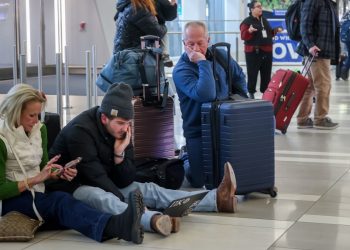
Airlines have canceled hundreds of flights, disrupting the plans of thousands of travelers during a busy holiday weekend and in a region that experts say is among the most popular with travelers this time of year. The disruptions have forced many people to absorb the costs of additional travel days.
Airlines are generally not required to reimburse passengers for disruptions beyond their control, although they may do so voluntarily.

Travel insurance policyholders – including those with standalone policies or who receive benefits through a credit card – may also be out of luck.
Many standard policies provide exceptions for disruptions due to war, undeclared war, civil unrest, rebellion, military activity or government intervention, experts say.
Policyholders stranded because of the military action in Venezuela “could find themselves strapped for cash,” said Sally French, a travel expert at NerdWallet.
The fine print varies from insurer to insurer.
It’s usually insurers who make the final decision on whether something like an undeclared act of war or civil unrest has occurred, French said.
“Venezuela’s situation is very unique,” French said. “In another situation, you might see the government declare war on a country. But Venezuela is a challenge because we don’t really know what’s going on.”
“There are a lot of gray areas,” she said.
Insurers cannot cover “risky” activities
Intoxication is another potentially surprising or “bizarre” exclusion, said Suzanne Morrow, CEO of InsureMyTrip, an insurance comparison site.
“If you are drunk and injured, your travel insurance may deny your medical benefits and not pay them because you were intoxicated,” she said.
Insurers may also consider certain activities risky.
Driving a moped is usually one of those exclusions, due to the risk of injury, Morrow said.
Standard policies also generally exclude safaris, hiking, horseback riding, skiing, snowboarding, scuba diving, hot air ballooning, zip lining, quad biking, driving an all-terrain vehicle, bungee jumping and kayaking, according to Squaremouth.
However, there are certain insurance policies and endorsements that consumers can purchase to cover such activities, Morrow said.
“Knowing what you’re doing ahead of time should inform your insurance decisions,” she said.
Some countries are prohibited
Another potential surprise for consumers: Travel to specific countries may not be covered by an insurance policy, Morrow said.
This may be due to government travel advisories that warn against visiting a country, federal sanctions against certain countries or an insurer listing certain excluded countries in a consumer’s policy, she said.
Some, like Afghanistan and North Korea, may seem simple, while others are less so, French said.
For example, some medical and evacuation benefits available through the Chase Sapphire Reserve credit card do not apply to travel to Vietnam, according to a website describing the card’s benefits.
“It’s definitely a growing country that a lot of people travel to,” French said. “North Korea, I understand. But Vietnam?”
Travel advisories for Vietnam posted on the U.S. State Department website are currently at Level 1, the lowest level of safety and security risks.
Other travel insurance policies can help
In addition to purchasing more tailored policies that cover them during specific activities and circumstances, consumers can also purchase more comprehensive coverage.
For example, Cancellation for Any Reason coverage allows consumers to cancel a trip – for any reason – and get their money back.
However, these policies are most beneficial to consumers before they leave on their trip, not those who have already left, experts say.
In fact, policyholders must generally inform the insurer at least 24 to 48 hours before the start of their trip to be entitled to benefits. Even then, consumers can typically recoup between 50 and 75 percent of the total cost of the trip instead of all of it, Valdez said.
Such policies also usually carry a higher price tag.
Another optional add-on is coverage against interruptions for any reason, Valdez said.
Let’s take a hypothetical example from Seven Corners, a travel insurer. Let’s say you’re in the middle of a vacation in several European cities and then you’re headed to Paris. You learn that there is an epidemic of bedbugs in many Parisian hotels and you want to cut the trip short instead of risking it. Bed bugs aren’t covered by most plans, but coverage in case of interruption for any reason could help consumers recoup some of the unused travel expenses, according to Seven Corners.
Source | domain www.cnbc.com