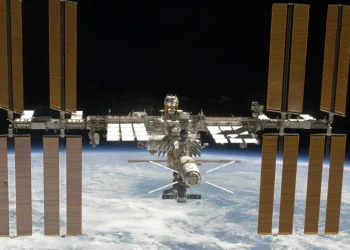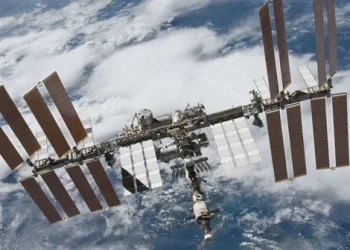


Four space station planes broke away and plunged toward Earth, crashing safely into the Pacific Ocean early Thursday off the coast of Southern California, six days later. NASA ordered them to return home early because of a medical problem.
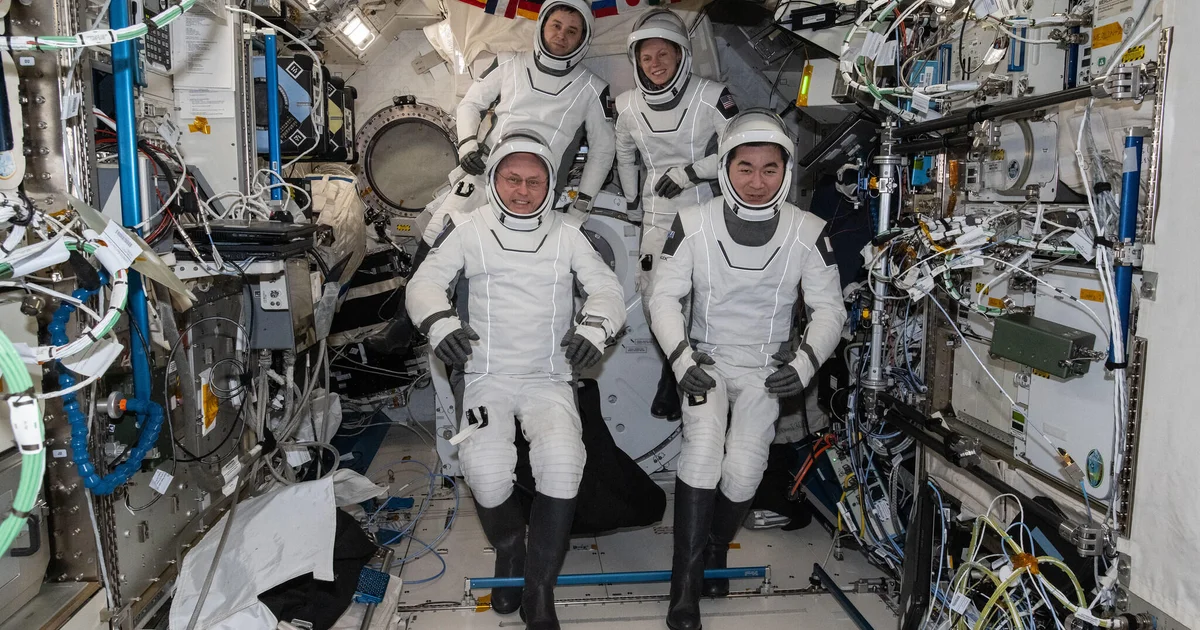
Descending under four large parachutes, Crew 11 commander Zena Cardman, co-pilot Mike Fincke, Japanese astronaut Kimiya Yui and Russian cosmonaut Oleg Platonov landed in the Pacific off the coast of San Diego at 3:41 a.m. EST, capping a 167-day stay in space.
SpaceX/NASA 
“On behalf of SpaceX and NASA, welcome home, Crew 11,” a SpaceX flight controller said over the radio.
“It’s so good to be home, with deep gratitude to the teams who got us there and back,” Cardman responded.
SpaceX support teams stationed near the landing site quickly reached the gently swaying spacecraft and transported it aboard a company recovery ship where flight surgeons were ready to perform initial medical checks.
SpaceX/NASA 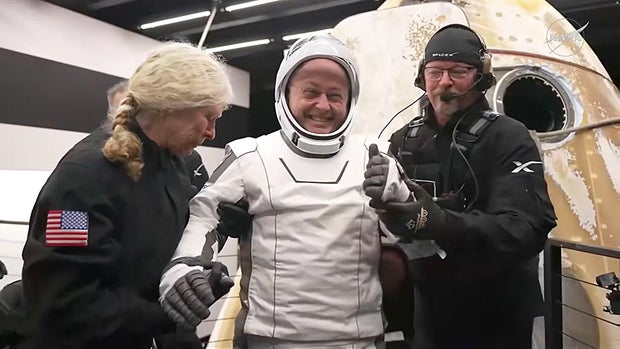
Following strict medical privacy guidelines, NASA did not identify the astronaut who had the medical problem in orbit or provide details about its nature.
But the crew appeared healthy and in good spirits as they were helped out of the cramped capsule and onto waiting stretchers – normal procedure for returning station crews – smiling and waving as they began to readjust to gravity after five and a half months in weightlessness.
“All crew members are currently undergoing routine post-landing medical evaluation,” NASA Administrator Jared Isaacman said at a post-landing news conference. “The affected crew member is doing well. We will share updates on their health as soon as it is appropriate.”
SpaceX/NASA 
All four were to be transported by helicopter to shore for further diagnostic evaluation at an unidentified area hospital.
“All four crew members will be transported to a local hospital for further evaluation, taking advantage of medical resources on Earth to provide the best possible care,” NASA said in a blog post.
“After a planned overnight hospital stay, the crew will return to NASA’s Johnson Space Center in Houston, where they will reunite with their families and undergo standard post-flight reconditioning and evaluations.”
Sergey Kud-Sverchkov, who took command of the space station after Fincke, and the Soyuz MS-28 cosmonaut’s two crewmates, Sergey Mikaev and NASA astronaut Chris Williams, remained in orbit. They were launched last November for a planned eight-month stay in space.
Cardman and his crewmates, who launched into space on August 1, 2025, were originally scheduled to return to Earth around February 20 to conclude a 202-day mission.
NASA 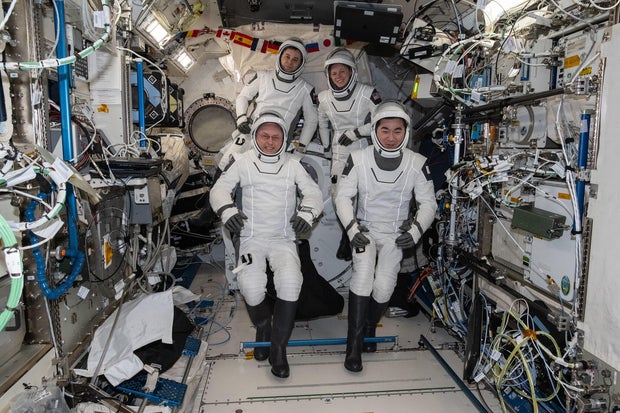
But last Wednesday, the day before a planned spacewalk by Cardman and Fincke, one of the crew members experienced a medical problem and the next day, NASA officials decided the problem was serious enough to bring the crew home early for further diagnostic evaluation.
NASA’s chief medical officer said it was not an emergency return in the normal sense, but the move marked the first time in NASA history that a spaceflight was aborted due to a medical issue.
In a lengthy LinkedIn post, Fincke said the crew was in good shape, but he added the decision was “the right decision.” The four astronauts appeared in good spirits during a change of command ceremony Monday when Fincke officially handed over the space station to cosmonaut Kud-Sverchkov.
None of the crew members mentioned the problem during the week between their initial request for a private medical conference and their return to Earth. In a final message on Wednesday X, Yui sent photos of Mount Fuji, saying “Hello! The day has finally arrived for our departure to Earth.”
“I haven’t had a chance to photograph Japan during the day recently, but at the very last moment we flew over the Pacific coast of Japan,” he said. “Mount Fuji bid us farewell, adorned with a touch of crimson makeup from the setting sun.”
NASA 
The space station is permanently staffed by a crew of seven: three people launch and return to Earth aboard the Russian Soyuz spacecraft and four fly to and from the laboratory aboard NASA-run SpaceX Crew Dragon ferries.
Both spacecraft serve as lifeboats during a crew’s long-term stay at the space station. If a Soyuz or Crew Dragon pilot becomes ill or seriously injured aboard the station, that person is joined by all of their crewmates for the flight back to Earth.
With this possibility in mind, NASA and Roscosmos, Russia’s federal space agency, agreed to fly a NASA astronaut aboard each Soyuz and a Russian cosmonaut aboard each Crew Dragon. Swapping seats ensures that at least one Russian and one American will still be on board the station to operate equipment in their respective modules in the event of a crew’s early departure.
NASA 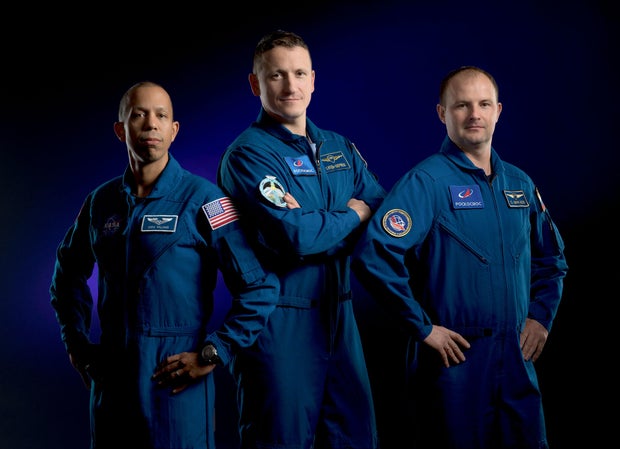
With the departure of Crew 11, Williams will manage the U.S. segment of the space station alone until Crew 12 arrives in February.
Crew 12 Commander Jessica Meir, a space station veteran, recruits Jack Hathaway and European Space Agency astronaut Sophie Adenot, along with veteran cosmonaut Andrey Fedyaev, are scheduled to officially begin their launch on February 15. However, NASA and SpaceX are considering moving that launch up a few days, as part of work to prepare for the launch of a Space Launch System rocket as early as Feb. 6 to send four astronauts in a combat loop around the moon.
The high level Artemis 2 This mission will be the first to send astronauts near the Moon in more than 50 years.
Source | domain www.cbsnews.com